
A CIPD assignment is not hard because the ideas are impossible. It is hard because you are juggling a long brief, strict criteria, a full time job and a deadline that does not move. Most of the pain comes from how the work is organized, not from the content itself.
This guide shows you how to make your CIPD assignment easier. You will get a 6 stage workflow, a simple template you can reuse for every unit, and a clear view of where expert help saves the most time.
| The short version: Plan by criterion, not by topic. Build one evidence bank you can reuse across units. Write the body before the introduction. Get expert feedback at two points: when you plan and when you have a full draft. Never let anyone write or submit the work for you. |
Why CIPD assignments feel heavier than they are
Most learners start a CIPD assignment the same way. They read the brief, open a blank document and start writing an introduction. Two hours later, they have 300 words and no idea whether any of them meet a criterion.
The problem is the order of work. A CIPD assignment is marked against assessment criteria, and assessors check each criterion separately. If you write in a flowing essay style first and try to match the criteria later, you end up rewriting most of it.
Three other things add weight:
- Command words. “Explain,” “analyze” and “evaluate” each ask for a different depth. Misreading one can mean a referral.
- Evidence. You need current, credible sources, not just your own opinion or experience.
- Your workplace. You must link theory to real practice, which means finding examples that fit each criterion.
The good news is that all of these can be planned in advance.
The 6 stage workflow for an easier CIPD assignment
Follow these stages in order. Each one makes the next stage faster.
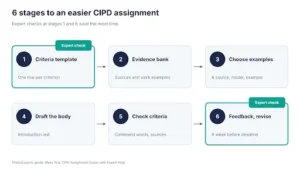
Figure 1: Six stages, with the points where expert help saves the most time.
Stage 1: Turn the brief into a criteria template
Before you read a single source, build a simple table. One row per assessment criterion, with four columns:
| Criterion | Command word | What I must show | Evidence and example |
|---|---|---|---|
| 1.1 | Explain | (Write it in your own words) | (Source and workplace example) |
| 1.2 | Analyze | ||
| 2.1 | Evaluate |
This table becomes the skeleton of your assignment. Each row turns into a section. You will know at a glance which criteria are covered and which are still empty.
Stage 2: Build an evidence bank
Keep one document for all your CIPD study, not one per unit. Add every useful source as you read it, with the full Harvard reference and two lines on what it shows.
Do the same for workplace examples. Write a short paragraph for each real situation you could use: a hiring decision, a dispute, a training program, a change in policy. Many examples work in more than one unit, so this bank saves hours later.
Stage 3: Choose your examples and models
Now fill the last column of your template. For each criterion, pick one source, one model or theory, and one workplace example. If a row stays empty, that is your first research task.
Stage 4: Draft the body first
Write the criterion sections before the introduction and conclusion. Use one point per paragraph. Start with your claim, add the evidence, then explain what it means for your workplace.
Leave the introduction until the end. It is much easier to introduce an argument you have already written.
Stage 5: Check against the criteria
Read each section and ask:
- Does it answer the command word the way it asks?
- Is there a source for every major claim?
- Is there a real example?
- Does the word count roughly match the weight of the criterion?
Use a citation tool such as the free citation generator to tidy references, and run the final draft through the free plagiarism checker before you submit.
Stage 6: Get feedback and revise
Ask someone who knows the CIPD criteria to review the full draft. Book this at least a week before your deadline, so you have time to act on the comments. Then make the changes, criterion by criterion.
A worked example: one criterion from plan to paragraph
Here is how the workflow looks for a single criterion. The criterion below is an illustration, so use the exact wording in your own brief.
The criterion: “Evaluate approaches to employee engagement in your organization.”
Stage 1, the template row. Command word: evaluate. What I must show: two or more engagement approaches, their strengths and weaknesses, and a judgment on which works best in my organization.
Stage 2, the evidence bank. One CIPD research report on engagement, one peer reviewed article on employee voice, and a note on the staff survey my team ran last year.
Stage 3, the choice. Model: the employee voice and engagement link. Workplace example: the monthly team forum that replaced the annual survey.
Stage 4, the paragraph. Open with a claim (“Regular team forums have improved engagement more than annual surveys in my organization”), add the evidence, weigh one weakness (“quieter staff speak up less in open forums”), and finish with a judgment.
That paragraph took one planning row and ten minutes to draft, because every decision was already made. Multiply that by every criterion and the whole assignment gets much lighter.
Where expert help saves the most time
You do not need help at every stage. Two points matter most.
At stage 1, the plan. A CIPD qualified expert can check your criteria template in 20 minutes and tell you if you have misread a command word or missed part of a criterion. Catching that early can save you a full rewrite.
At stage 6, the full draft. A second reader can tell you which criteria are met and which are not, before the assessor does. This is where most referrals are avoided.
Some learners also want help at stage 3 to find the right models for a tricky unit, or after a referral to understand what “not yet met” means in practice. That is fair use too, as long as the thinking and writing stay yours.
Fair help versus misconduct
Expert help should make you a better and faster writer. It should never replace your work. Centres treat submitting someone else’s work as misconduct, and the result can be withdrawn.
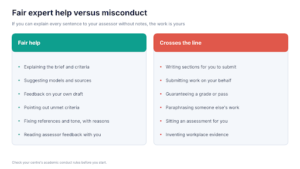
Figure 2: What fair expert help looks like, and where it crosses the line.
A simple rule: if you could explain every sentence in your assignment to your assessor without notes, the work is yours. The CIPD students hub and your centre’s handbook set out the rules on academic conduct, so read them once before you start.
Unit specific tips that make life easier
Different units create different headaches. A few patterns come up often:
- Evidence based practice. Plan your data and sources early. This unit rewards careful use of research, not long descriptions.
- Employment law and relations. Check that your examples match current rules and your centre’s expectations on UK versus local law.
- L&D units. Learners on the learning and development pathway often struggle to link training activity to business goals. What is an L&D Strategy? explains how strategy, needs analysis and evaluation fit together, which gives you a framework for several criteria.
- Level 7 research project. Treat it like a small dissertation. Agree your question and method early, and get feedback on your proposal before you collect data.
For more general advice on structure, command words and referencing, read Key Tips for CIPD Assignment Success. It pairs well with the workflow in this guide.
How to get the most from an expert
When you book support, a little preparation goes a long way:
- Send the brief and criteria first. The expert should read them before the call.
- Share your template or draft. Even a rough version helps.
- Bring two specific questions. “Is my 2.1 evaluation balanced?” gets a better answer than “Is this okay?”
- Ask for criterion by criterion feedback. General comments are hard to act on.
- Make changes within 48 hours. Advice fades fast.
If you have a referral, send the assessor’s feedback too. A good expert reads it first and builds the plan around it.
Where to find CIPD expert help
Look for an expert who holds your CIPD level, has supported your unit, and explains rather than offers to write. Ask for a fixed quote and a short trial before you commit.
CIPD Assignment Help on PrestoExperts covers plan reviews, draft feedback and referral support across Levels 3, 5 and 7. Prestoexpert is a verified expert marketplace with support 24/7, and your first 20 minutes are free.
Your easier CIPD assignment checklist
- A criteria template with one row per criterion
- One evidence bank for sources and workplace examples
- A source, a model and an example for each criterion
- Body sections drafted before the introduction
- References checked and the draft scanned for plagiarism
- Expert feedback at least a week before the deadline
Work smarter, not longer
You cannot shorten the brief or move the deadline. But you can change how you work. Plan by criterion, reuse your evidence, and get expert feedback at the two points where it counts. Your next CIPD assignment will take less time and feel far less stressful.
Want an expert to check your plan or draft? Book a free 20 minute session and bring your brief and criteria.