If you study CIPD outside the UK, an online CIPD tutor can fill the gaps your centre cannot. You might be in Dubai, Lagos or Karachi, writing in your second or third language, and working under labor laws that look nothing like the UK examples in your reading. A good tutor helps you read the brief, write in the academic style assessors expect, and fit your own workplace into the criteria.
This guide explains what online CIPD tutors do, how to work across time zones, and how to choose one when you cannot meet anyone face to face.
| The short version: International CIPD students usually struggle with three things: academic English, UK context in the units, and time zones. Pick an online tutor who holds your CIPD level, works hours that overlap with yours, explains the criteria in plain English, and gives a fixed quote. Test the fit in a short trial call before you pay. |
You are not the only one studying CIPD from abroad
CIPD is a UK body, but its learners are spread around the world. In its annual report for the year to June 2024, the CIPD said 28,600 learners started a CIPD qualification or accredited degree, and those learners came from more than 130 countries. Membership passed 162,000.
So the problems you face are common. Centres in the Gulf, Africa and Asia teach the same qualifications, and many learners study fully online through UK providers. What changes is the support around you. Your classmates may be spread across five time zones, and your tutor at the centre may answer one email a week.
Why international students need a different kind of CIPD support
A UK learner and an international learner can sit in the same unit and hit very different walls.
Academic English. CIPD assessments are written in English and marked against strict criteria. If English is not your first language, you may know the answer but lose marks on structure, tone or word choice. A command word such as “evaluate” means something specific, and a fluent but descriptive answer will not meet it.
UK context versus your workplace. Some units lean on UK research, UK data and UK employment law. Your own workplace may run under UAE labor law, Saudi labor law or Nigerian employment rules. You need to show you understand the UK frame and still use your real experience. How much local context you can use depends on your brief and your centre, so always check.
Referencing habits. Many centres expect Harvard referencing. If your earlier degree used a different style, or no consistent style at all, this alone can cost you a resubmission.
Time and distance. Your centre’s office hours may fall in your evening or the middle of the night. Waiting three days for an answer to a simple question is how deadlines slip.
What online CIPD tutors actually do
A good online tutor does not write your assignment. They make you faster and clearer at writing it yourself. In practice, that means:
- Breaking down the brief and each assessment criterion in plain English
- Showing you which CIPD models and theories fit your question
- Helping you choose workplace examples that match each criterion
- Reviewing your draft and telling you which criteria are met and which are not
- Correcting academic tone and structure, and explaining why
- Checking Harvard references and citations
- Helping you read assessor feedback after a referral and plan the fix
Sessions usually run over Zoom, Google Meet, Teams or WhatsApp video. You share your screen, work through your draft together and keep the notes.
How to work across time zones
Time zones decide how fast you get help. Before you book anyone, check where their working day falls in your day.
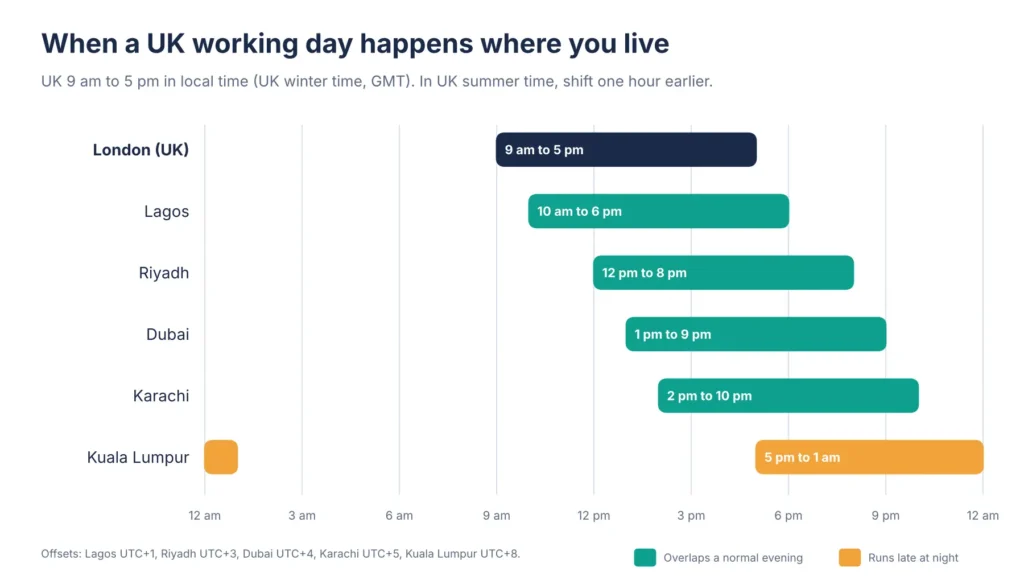
Figure 1: A UK working day in local time, based on UK winter time (GMT). In UK summer time, shift every bar one hour earlier.
A few things stand out. A UK based tutor’s afternoon is your evening if you live in the Gulf, which suits people who work during the day. In Kuala Lumpur, the same hours run past midnight, so you need a tutor based closer to you or one who works flexible hours.
Three habits make the gap easier to manage:
- Agree on a reply window. Ask “If I send a question at 8 pm my time, when will you reply?” and write the answer down.
- Book sessions in your time zone. Use a calendar invite so both sides see the correct local time.
- Send work before the session. A tutor who reads your draft before the call spends the session fixing it, not reading it.
How to choose an online CIPD tutor when you study abroad
You cannot visit an office or meet a tutor before you book. So you need a simple way to compare people from their profiles and a short call.
| Check | Why it matters for international students | What to ask |
|---|---|---|
| CIPD level held | They should have passed the level you are studying | “Which CIPD level do you hold?” |
| Hours overlap | Replies inside your working day keep you moving | “What hours do you work in my time zone?” |
| Plain English | You need explanations, not jargon | Ask them to explain one criterion in two sentences |
| Local awareness | They should respect your workplace context | “How would you use my company’s example here?” |
| Fixed quote | Prevents surprise costs in another currency | “What is the full price, and what does it include?” |
| Trial session | Lets you test the fit with no risk | “Can we do a short first call?” |
| Integrity | Protects your qualification | “What will you not do?” |
If a tutor offers to submit work for you, or promises a grade, walk away. Your center can withdraw a result for misconduct, and that risk falls on you, not on the tutor.
What a good online CIPD session looks like
The best sessions follow a simple pattern. Most of the value comes from what happens before and after the call.
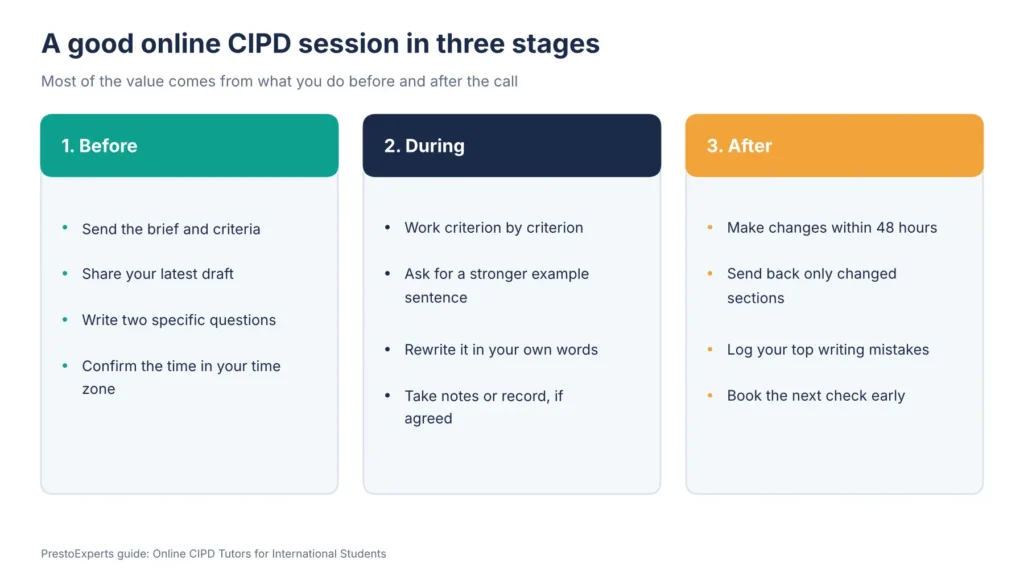
Figure 2: Prepare, work through the draft, then act on the feedback within 48 hours.
Before the session. Send your brief, the criteria, your draft and two specific questions. “Is my 1.2 analysis deep enough?” works better than “Is this good?”
During the session. Work criterion by criterion. Ask the tutor to show you a stronger sentence, then rewrite it in your own words. Take notes or record the call if they agree.
After the session. Make the changes within two days while the advice is fresh. Send back only the sections you changed, not the whole assignment.
Mistakes international students make with tutors
A few patterns come up again and again, and each one wastes time or money:
- Booking the first tutor they find. Compare at least two before you pay.
- Sending the whole assignment two days before the deadline. There is no time left to act on the feedback.
- Asking for “a check” without saying what to check. Name the criteria you are worried about.
- Ignoring time zones. A brilliant tutor who replies at 3 am your time will slow you down.
- Hiding that English is a second language. Say it upfront, so the tutor can adjust how they explain things.
Build your academic English and communication skills
Many international students see tutoring as a deadline fix. It works best when it also builds your writing and speaking skills for the long term. Clear writing helps your CIPD marks, and clear speaking helps in interviews, presentations and HR meetings.
If you want a wider view of why this matters, read 7 Key Points Explaining the Importance of Communication Skills for Students. Then put it into practice in your sessions:
- Ask your tutor to flag the three writing mistakes you make most often.
- Keep a short list of phrases for analysis, such as “this suggests,” “in contrast” and “the evidence indicates.”
- Read one CIPD research report a month and note how the authors build an argument.
Pair tutoring with good study habits
A tutor can save you hours, but only if you show up prepared. Plan your week around your unit deadlines, block short study sessions on workdays, and review feedback the same week you receive it.
For a practical plan you can adapt, see How Can Students Improve Academic Performance? It covers time planning, active recall and how to use feedback well. Those habits matter even more when your centre and your tutor are in different countries.
Cost, currency and payment
Prices for online CIPD tutors vary by level, unit and turnaround. Level 7 support usually costs more than Level 3 because the work is longer and more demanding.
When you pay from abroad, keep these points in mind:
- Ask for the price in writing, in a currency you understand.
- Check whether the quote covers draft feedback, a second review and messages between sessions.
- Avoid paying the full amount for a long package before you have tried one session.
- Use a payment method that gives you a receipt.
Where to find online CIPD tutors
A marketplace makes comparison easier because you can see profiles, levels and response times in one place. Browse CIPD Tutors by level and unit, then shortlist two or three who work hours that suit you.
Prestoexperts is a verified expert marketplace with support 24/7 and a free 20 minute trial session. You can use the trial to ask the questions in the table above before you commit to anything. If you already have a brief and a deadline, the CIPD assignment help page explains how draft reviews work.
Study from anywhere, with the right support
Studying CIPD from abroad is hard, but the problems are specific and fixable. Get clear on the criteria, write in the style assessors expect, and work with a tutor whose hours match yours. Then use every session to get a little more independent.
Ready to try it? Book a free 20 minute session with an online CIPD tutor and bring your brief, your unit and your time zone.