You can write a strong paper and still have no readers. If the right words are missing from your title, search tools may never show it to the people looking for your topic. Keywords in research paper titles decide whether your work turns up in Google Scholar, library databases and journal searches.
This guide shows you the evidence, then gives you 7 steps to choose and place keywords in your title. It works for journal articles, dissertations and conference papers.
| The short version: Search tools give title words a lot of weight. Pick one or two terms your readers actually search, place them within the first 65 characters, spell out acronyms, and repeat the same terms in your abstract and keyword list. Keep the title readable. A title stuffed with keywords helps no one. |
Why title keywords matter for discoverability
Most readers find papers through search. They type a few words into Google Scholar or a database and scan the first page of results. If your paper is not on that page, most people will never see it.
Titles matter a lot in that ranking. In a study of Google Scholar’s ranking algorithm, Beel and Gipp (2009) found that 86% of articles in the top 10 results had the search term in their title. For the last 10 results they checked, the figure was only 26%.
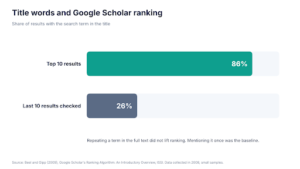
Figure 1: Title words and Google Scholar ranking, based on Beel and Gipp (2009).
The same study found that repeating a term many times in the full text did not lift a paper higher. Mentioning it at least once mattered, but repetition did not.
Keep the limits in mind. The data was collected in 2008, the samples were small, and Google Scholar has changed since then. Still, publishers give the same advice today. Wiley’s SEO guidance for authors tells authors to include one or two keywords in the title and to place them within the first 65 characters.
Step 1: Find the words your readers actually use
Your keyword is not the word you like best. It is the word other researchers type into a search box. Those are often different.
Ways to find the right terms:
- Look at top papers in your area. Note the words in their titles and their author keyword lists.
- Use the search box suggestions. Start typing your topic in Google Scholar and see what it offers.
- Check controlled vocabularies. In health, MeSH terms show the standard wording. In education, ERIC descriptors do the same job. Many fields have a thesaurus like this.
- Ask your supervisor or librarian. They know the terms your field prefers.
Write down five to ten candidate terms before you choose.
Step 2: Pick one or two primary terms
You cannot fit ten keywords into a title, and you should not try. Choose the one or two terms that best describe your main topic, and treat the rest as supporting words for the abstract and keyword list.
A useful test: if someone searched only these two terms, would your paper be a good answer? If yes, you have chosen well.
Step 3: Place keywords within the first 65 characters
Search results, database lists and mobile screens often cut long titles short. If your main term sits at the end, readers may never see it.
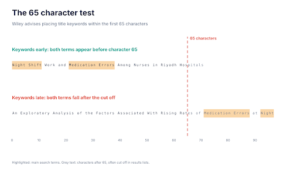
Figure 2: The same study, two titles. Only one shows its keywords before the cut off.
To test your own title, paste it into any character counter and check what falls in the first 65 characters, spaces included. Your main keyword should be inside that range.
Step 4: Spell out acronyms and use the common term
Readers search for full terms more often than acronyms, and many acronyms mean different things in different fields. “PTSD” is clear in psychology, but “CSR” could mean corporate social responsibility or something else entirely depending on the field.
The Nature formatting guide says titles should not normally include acronyms or abbreviations. Most module guides take the same view. Use the full term in the title, then introduce the acronym in your abstract or introduction.
Also prefer the common term over a rare one. If most papers say “employee turnover,” do not title yours “staff attrition dynamics” unless your field uses that phrase.
Step 5: Match your title, abstract and keyword list
Search tools read more than the title. They also scan the abstract and the keyword list. When all three use the same terms, your paper looks clearly relevant.
Wiley suggests placing key findings and keywords in the first two sentences of the abstract and repeating keywords three to six times in it. Then use the same main terms in your keyword list, plus a few synonyms there. Older studies suggested Google Scholar did not match synonyms well, so the keyword list is a good place to cover other wordings.
Step 6: Balance keywords with readability
A keyword rich title still has to read like a sentence a human would write. Stuffing every term in makes your title look careless, and markers and editors notice.
| Too vague | Keyword stuffed | Balanced |
|---|---|---|
| Green Choices at Work | Green HRM, Sustainability, Environmental Behavior, Employee Engagement and Green Training in Firms | Green HRM and Employee Environmental Behavior in Manufacturing Firms |
| Learning in a New Way | Mobile Learning, mLearning, E-Learning, Smartphones and Student Outcomes in Universities | Mobile Learning and Exam Performance Among Nursing Students |
| Money Matters | Fintech, Digital Payments, Financial Inclusion, Mobile Money and Banking Access | Mobile Money and Financial Inclusion Among Rural Households in Kenya |
The balanced titles carry the key terms early, name a group and stay under about 15 words.
Step 7: Test it in a real search
Before you submit, search your main keywords in Google Scholar or your library database. Look at the first page of results.
- If the results match your topic, your terms are right.
- If they are about something else, your terms are too broad or mean something different in another field.
- If there are almost no results, you may be using wording nobody else uses.
Adjust and search again. This takes five minutes and can make a real difference to how often your paper is found.
A worked example: from keywords to title
Say you studied how often nurses on night shifts make medication errors, using hospital records from three hospitals in Riyadh.
- Candidate terms: night shift, shift work, medication errors, drug administration errors, nurses, patient safety, Saudi Arabia.
- Search check: “medication errors” and “night shift” both return plenty of related papers, so they are the terms your readers use.
- Draft title: “An Analysis of Factors That May Contribute to Drug Administration Mistakes During Night Shifts in Saudi Hospitals.” The key terms sit late, and “mistakes” is not the common word.
- Revised title: “Night Shift Work and Medication Errors Among Nurses in Riyadh Hospitals.” Both main terms now sit within the first 40 characters, and the group and place are clear.
- Abstract and keywords: open the abstract with “night shift work” and “medication errors,” then add “patient safety” and “drug administration errors” to the keyword list.
Does this matter for a dissertation or class paper?
Yes, more than many students expect. Many universities place finished dissertations and theses in an online repository, and search engines can index those pages. A clear, keyword rich title helps future students and researchers find your work, and that can be useful for your career.
For class papers, the main reader is your marker. Even so, the same habits help. A title that names your main concepts early shows your marker you know exactly what your paper covers. And if you later turn the paper into a conference talk or a journal article, the title is already close to ready.
Common keyword mistakes in research paper titles
- Clever titles with no search terms. “Mind the Gap” might be fun, but it tells a search engine nothing.
- Burying the keyword after a long phrase. “An Exploratory Analysis of Factors Influencing…” pushes your topic past the cut off.
- Using the acronym only. Readers may not search for it.
- Changing terms between title and abstract. Pick one wording and stay with it.
- Stuffing in every possible term. It hurts readability and looks unprofessional.
Use a title generator to test keyword placement
If you have your keywords but no title, a generator can help. Enter your main terms in the Research project title generator and review the options it gives you. Pick the ones that put your keywords early, then edit them with the steps above.
For more general advice on title style, length and structure, read Tips to Create the Best Research Paper Title in 2027. If you are still working on the paper itself, How to Write a Research Paper walks through each section, from the question to the conclusion.
Get expert feedback on your title and abstract
A subject tutor can check whether your keywords match how your field searches, and whether your title and abstract say the same thing. Presto Expert connects you with verified tutors in many subjects, available 24/7. The first 20 minutes are free, so you can bring your title, abstract and target journal or module.
Make your paper easy to find
Good research deserves readers. Choose terms your readers search, place them early in the title, spell out acronyms and keep your title, abstract and keyword list consistent. Then test it in a real search before you submit.
Want a tutor to review your title and keywords? Book a free 20 minute session and bring your draft title and abstract.