
Choosing from the many possible HCM 600 research topics is the first real test of your research project at Saudi Electronic University (SEU). Your supervisor expects a title in the second week, and a blank page makes that feel tight.
This how-to guide shows you, step by step, how to pick a topic, shape it into a strong title and get it ready for Form 1. To keep it practical, we studied the register of 490 approved HCM600 research titles from six sessions between 2023 and 2025 and pulled out the patterns that matter.
You’ll also find 30 sample topics, a title checklist and a two week plan.
Quick answer: To choose your HCM 600 research topic, start with a real problem from your workplace, pick one theme, add a Saudi setting and population, then choose a design you can finish. Most approved titles use a systematic review (59%) or a cross-sectional study (24%). Write your title as: factor, outcome, setting, then a colon and the design.
What HCM 600 Expects From You
HCM600 is the Research Project course in the College of Health Sciences. According to the HCM600 research project guide for term 202420, you design a research question, study it and write a report under your supervisor’s guidance. The course is applied, so the work should solve a practical problem in your specialization.
The guide sets a tight early timeline:
| Milestone | Deadline in the guide |
| Form 1: title to your supervisor, then the research committee | End of week 2 |
| Form 2: research proposal | End of week 4 |
| Ethics approval, if your study needs it | End of week 6 |
| Similarity report | Must not exceed 25%, excluding references |
| Maximum duration | Three semesters |
Always check the latest guide for your own term. Dates and forms can change, and your supervisor has the final word.
How to Choose Your HCM 600 Research Topic in 6 Steps
Step 1: Start with a problem you’ve seen
You will work on this topic for months. Pick a problem from your own hospital, clinic, pharmacy or department. Real context makes your introduction and discussion much stronger.
Step 2: Pick one theme, then narrow it
“Digital health” is a theme, not a topic. “Telehealth follow-up and readmissions in chronic disease” is a topic. Keep narrowing until one sentence can state your question.
Step 3: Add a setting and a population
Name where and who. A Saudi region, a hospital type or a staff group makes the study feasible and easier to approve.
Step 4: Choose a design you can finish
Match the design to your access and your timeline. If you can’t reach a sample quickly, a systematic review may be safer. If the literature on your question is thin, a survey may fit better.
Step 5: Run a quick feasibility check
Search a database such as PubMed or Google Scholar for your key terms. For a review, you want enough studies to synthesize. For a survey, you want a realistic way to reach your respondents.
Step 6: Draft titles, then test and refine them
Write several versions and compare them. The next section shows how to build a strong title, and a later one shows how to speed up the drafting.
How to Choose Your HCM 600 Research Paper Title
A topic is the idea. A title is the sentence your supervisor and the research committee judge first. Here is how to turn one into the other.
Build the title from five parts
Strong approved titles are easy to take apart. Each one answers five questions:
| Part | Question it answers | Example |
| Factor | What are you studying? | Telehealth follow-up |
| Outcome | What result do you measure? | Hospital readmissions |
| Population | Who is involved? | Chronic disease patients |
| Setting | Where does it happen? | Riyadh |
| Design | How will you study it? | Systematic review |
If one part is missing, the title feels vague. Write each part in a short phrase first, then join them.
Pick strong words, avoid weak ones
Specific words signal a focused study. Vague words signal a topic that hasn’t been narrowed yet.
| Weak wording | Stronger wording |
| Healthcare in Saudi Arabia | Nurse retention in public hospitals in the Eastern Province |
| A study of telemedicine | Telemedicine adoption barriers among primary care physicians |
| Improving quality | Effect of accreditation on hospital patient safety outcomes |
| AI in hospitals | AI-assisted appointment scheduling and outpatient waiting times |
These examples are ours, written to show the difference. They are not approved titles.
Match the title to your design
Your title promises a method, so make sure it fits.
- For a systematic review, end with “A Systematic Review” and plan a search strategy that can back it up.
- For a cross-sectional study, name the group you will survey and the place, for example “Among Nurses in Riyadh: A Cross-Sectional Study”.
- For anything else, such as a retrospective study, state it plainly in the subtitle.
Choose the type of title
Writing guides, such as Editage’s, describe three types: descriptive, declarative and interrogative. Here’s how they play out in the register.
- Descriptive titles state the topic and scope without giving the result. Nearly every approved HCM 600 title is built this way.
- Declarative titles state the finding, and they show up more in clinical papers than in student projects. You can’t write one before you have results.
- Interrogative titles ask a question. Only one of the 490 approved titles does.
For Form 1, a descriptive title with a colon and a design label is the safe choice.
Pick 3 to 5 keywords and build the title around them
Editage suggests building a title around three to five searchable keywords. For an HCM 600 project, those are usually your factor, your outcome, your population and your design. Put the most important term near the start, and use the exact words a researcher would type into PubMed or Google Scholar.
For a systematic review, a quick way to find them is the PICO frame: population, intervention or exposure, comparison, and outcome. Fill in each box in plain words, then trim.
Keep the length under control
Journal guides often recommend 10 to 16 words. Enago suggests 5 to 15. Approved HCM 600 titles run a little longer, because they carry a setting and a design label. The median is 17 words. Roughly half fall between 14 and 19 words, and 82% are 20 words or fewer. Only 18% run over 20, and the longest has 39.
So aim for 12 to 20 words. If you’re past 20, cut filler first. Phrases like “a study of” or “an investigation into” add length without meaning. None of the 490 titles use “a study of”.
Your supervisor guide says a published paper from the project is preferred. A shorter journal version of your title will help later, so keep a 10 to 15 word backup in your notes.
Mind punctuation and formatting
- Use a colon to split the topic from the design. Avoid dashes, which 14 approved titles use and which read as messy.
- Use title case, not all capitals. 47 titles in the register are in all caps, and it makes them hard to read.
- Write abbreviations out the first time unless they’re better known than the full term. “AI” and “EHR” are usually fine. A local acronym isn’t.
- Skip quotation marks, exclamation marks and stacked punctuation.
- Write “systematic review,” not “systemic review.”
Check it against the committee’s eyes
Before you submit Form 1, ask yourself:
- Does it name the factor and the outcome?
- Does it name the Saudi setting or population?
- Is the design named correctly, as “systematic review” and not “systemic review”?
- Can I finish this in my timeline, with the data or evidence I can reach?
- Is it my own wording, not a copy of an existing approved title?
Then show two or three versions to your supervisor. They can tell you which one the committee is most likely to approve.
What 490 Approved HCM 600 Titles Tell Us
The register we studied runs from session 202310 to 202520. It contains 490 unique titles, with no duplicates. Session sizes range from 58 titles to 127.
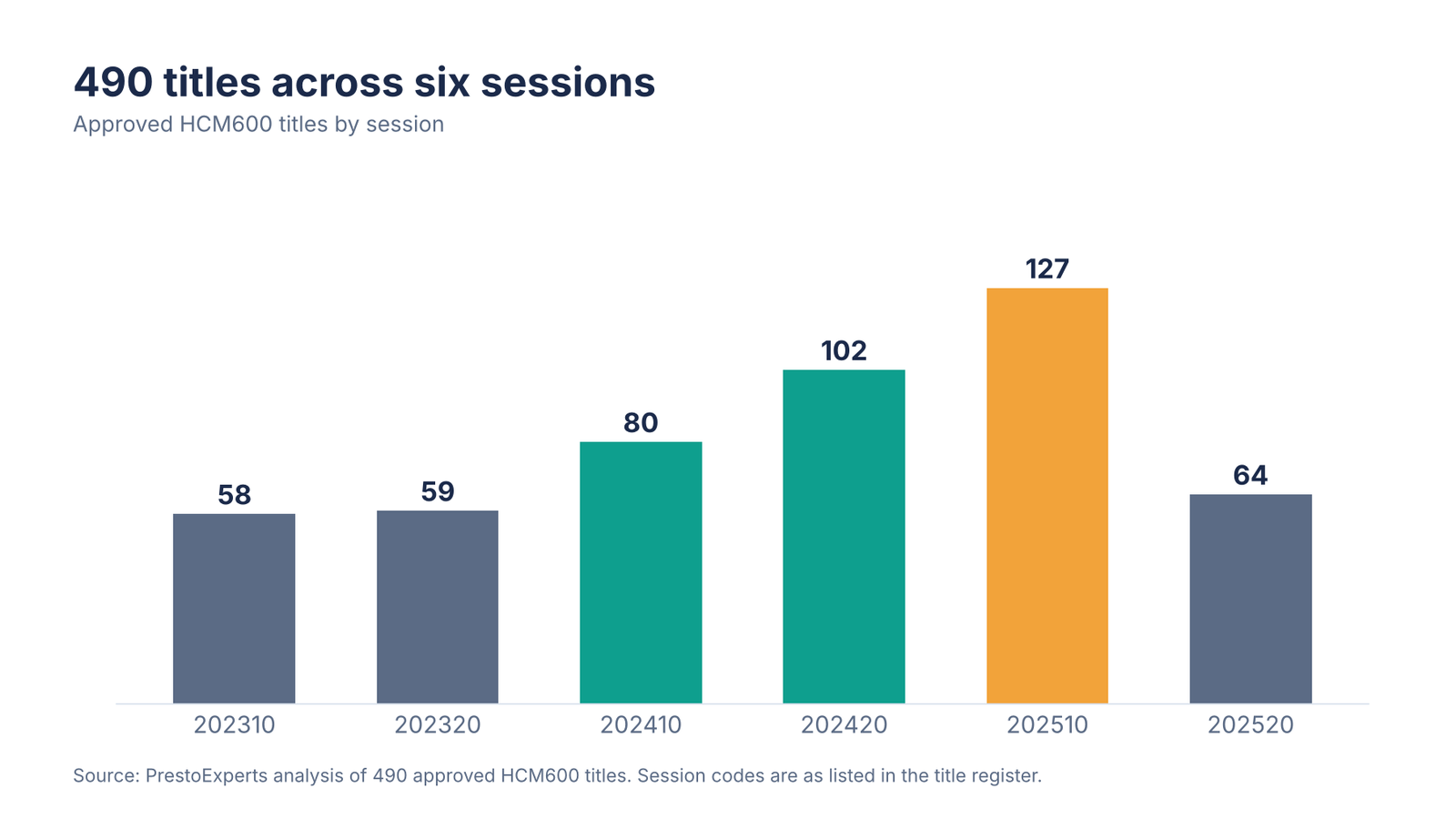
Figure 1: Approved HCM600 titles by session.
Three patterns stand out.
First, the geography is local. About 63% of titles (311) name Saudi Arabia, KSA or a Saudi city or region. Riyadh, Jeddah, Dammam, Qassim and the Eastern Province all appear.
Second, the wording leans on cause and effect. 44% of titles (216) use “impact”, “effect” or “influence”.
Third, titles are long. The median title runs 17 words, and 74% use a colon to split the topic from the design.
Which Study Design Should You Use for HCM 600?
This is the biggest finding. Of the 490 titles, 289 name a systematic review and 118 name a cross-sectional study. Together that covers 405 titles, or 83%.
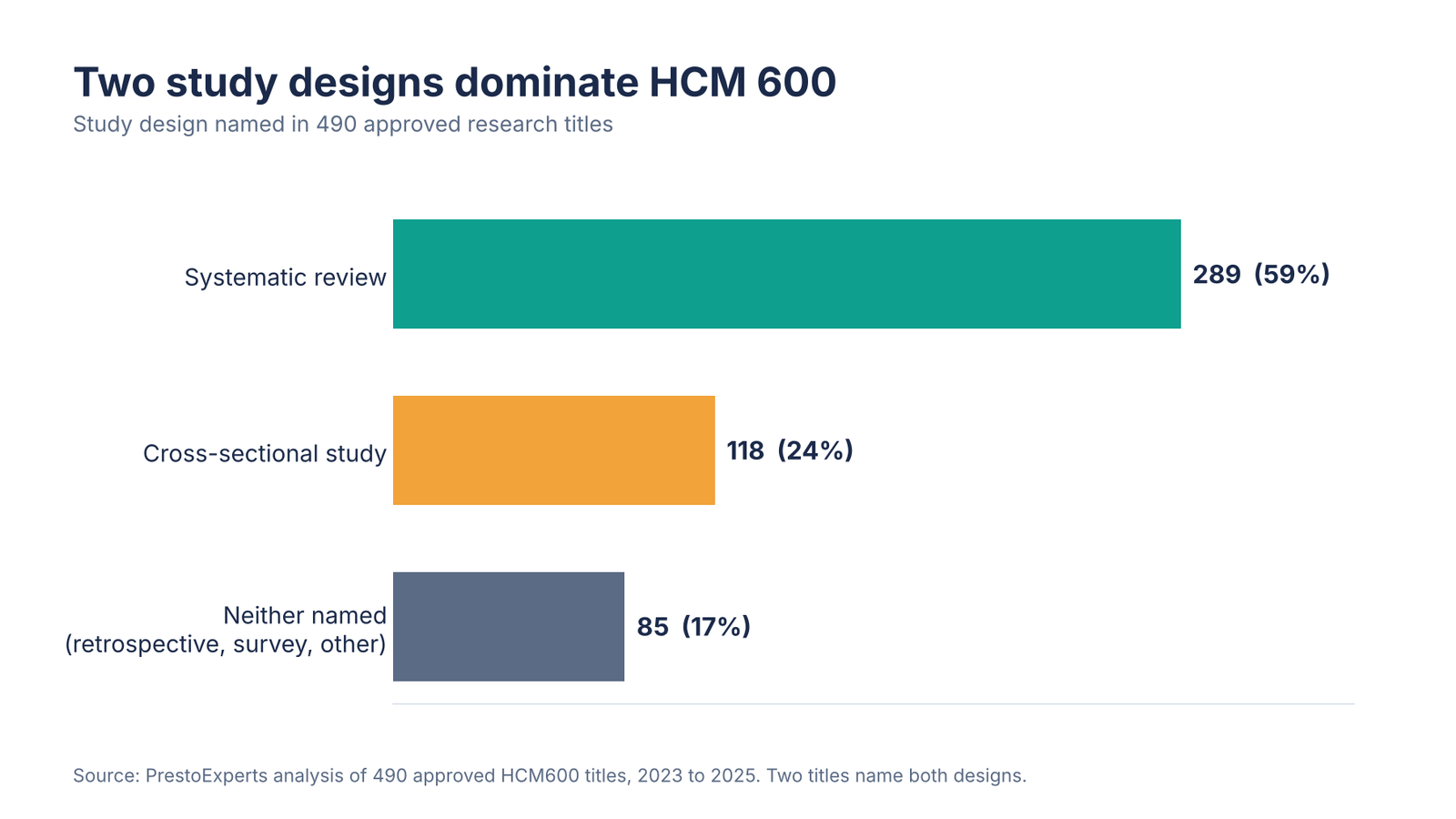
Figure 2: Study design named in the title. Two titles name both.
Only 85 titles name neither. The few that do mention a retrospective study, a survey, a qualitative approach, a mixed-methods design or a bibliometric analysis.
One small warning. Eleven titles in the register write “systemic review”. The correct term is systematic review. A supervisor or committee reader will notice, so get the name of your design right from day one.
Systematic review or cross-sectional study?
Both can work. The trade-offs are practical:
- A systematic review depends on published evidence. You need enough good studies on your question, a clear search strategy and a method such as PRISMA to report it.
- A cross-sectional study depends on people. You need a reachable sample, a survey tool, and time for ethics approval if your supervisor says it applies.
- Week 6 is the ethics deadline in the guide. A survey that needs approval has less room for delay than a desk-based review.
Ask your supervisor which design fits your question and your timeline. Then choose.
The Most Common HCM 600 Research Topic Themes
We counted how often key themes appear in the titles. One title can fit more than one theme, so the numbers overlap.
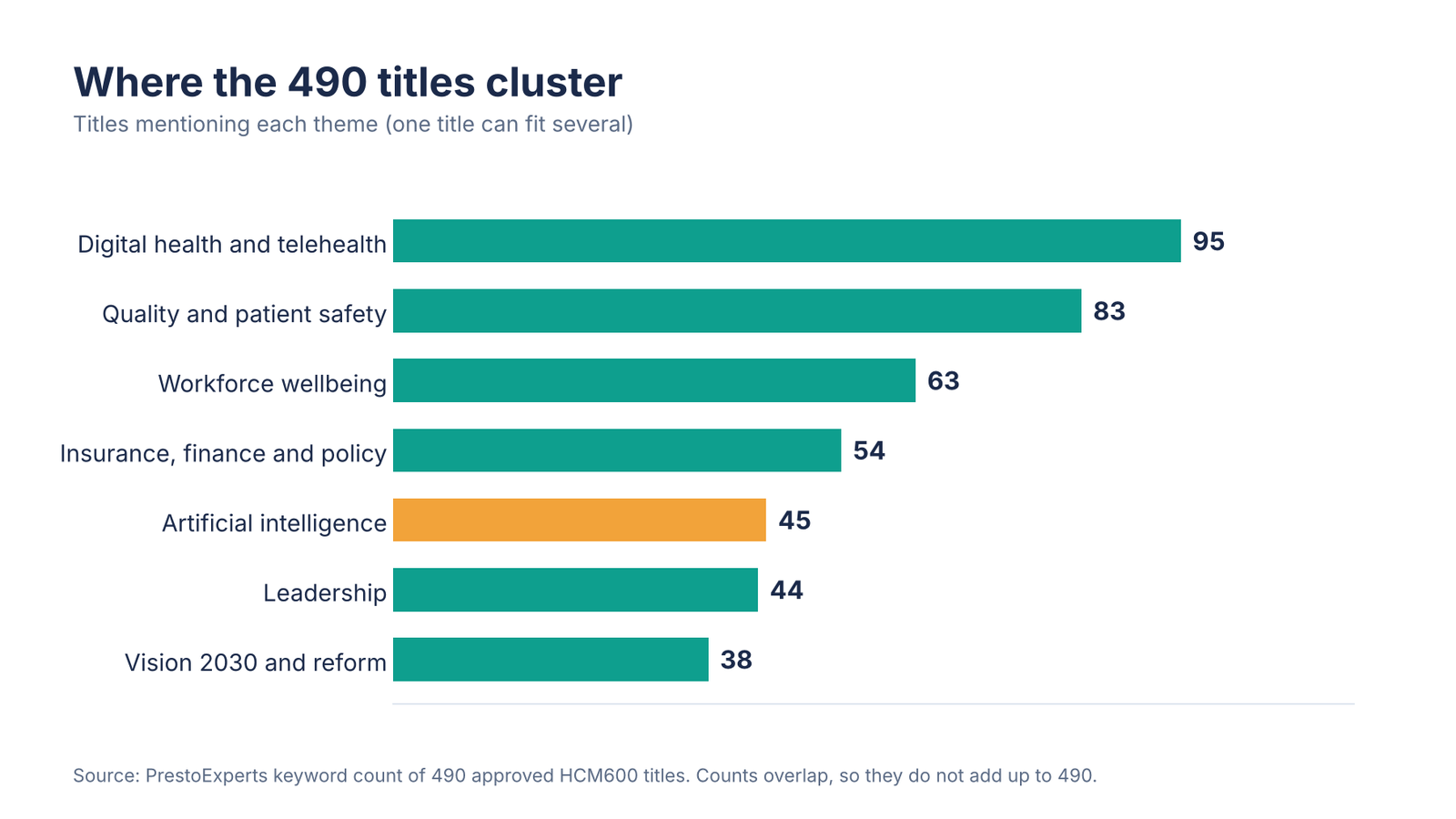
Figure 3: Theme counts across 490 approved titles.
Here is what each theme looks like in practice.
Digital health and telehealth (95 titles)
This is the largest theme. It covers telemedicine, electronic health records, mobile health apps and health information exchange. Typical questions ask about adoption, barriers and the effect on access or quality.
Quality and patient safety (83 titles)
Think medication errors, infection control, accreditation and quality improvement programs. Many of these ask whether a specific initiative improved outcomes in Saudi hospitals.
Workforce wellbeing and satisfaction (63 titles)
Burnout, turnover, job satisfaction, shift work and nurse retention fill this group. They suit a cross-sectional survey of staff or a systematic review of the global evidence.
Insurance, finance and policy (54 titles)
Value-based payment, health insurance access, costs and privatization appear here. Policy topics often link to national reform plans.
Artificial intelligence (45 titles)
AI is a smaller but growing theme. Examples include AI in patient monitoring, appointment management and clinical documentation. Narrow it to one setting, or the topic gets too broad.
Leadership (44 titles)
Leadership style shows up with patient safety, nurse retention, team performance and job satisfaction. It pairs well with almost any other theme.
Vision 2030 and reform (38 titles)
These titles tie a healthcare question to Saudi Vision 2030 and the wider transformation of care. They need a clear, measurable outcome so they don’t turn into a general essay.
The Title Formula Behind Most Approved Topics
Read enough approved titles and the structure becomes clear. Most follow this pattern:
Impact of [intervention or factor] on [outcome] in [Saudi setting]: A [study design]
Here are three examples we wrote to show the pattern. They are illustrations, not approved titles.
- The Impact of Telehealth Follow-Up on Hospital Readmissions Among Chronic Disease Patients in Riyadh: A Systematic Review
- Leadership Style and Nurse Retention in Public Hospitals in the Eastern Province: A Cross-Sectional Study
- Barriers to Electronic Medical Record Adoption Among Primary Care Staff in Saudi Arabia: A Systematic Review
Each one names a clear factor, a clear outcome, a place and a design. Reviewers can tell at a glance what you plan to do.
30 Sample HCM 600 Research Topics From Approved Titles
Examples teach faster than rules. Below are 30 titles taken from the approved register and grouped by theme. We fixed capitalization and spelling, and shortened a few place names, but the ideas are unchanged.
Use them to see how real titles balance a factor, an outcome, a setting and a design. Don’t submit one as your own. Your supervisor and the research committee need to approve a title that is specific to you.
Digital health and telehealth
- Assessing Barriers to Telemedicine Adoption in the Kingdom of Saudi Arabia Healthcare Sector: A Systematic Review
- Barriers and Challenges Faced by Healthcare Professionals in Implementing Electronic Medical Records in Saudi Arabia: A Systematic Review
- Impact of Using Electronic Medical Records on Burnout Among Nurses: A Systematic Review
- Prevalence, Attitude, and Intention of Using Telehealth Among Neurologists in Saudi Arabia
- Pharmacists’ Satisfaction and Practices of Telepharmacy Services in Riyadh
Quality and patient safety
- Barriers to Medication Error Reporting in Saudi Hospitals: A Systematic Review
- The Effectiveness of Pre-Anesthesia Clinics in Improving Patient Safety and Outcomes in Cardiac Surgery: A Systematic Review
- Influence of Accreditation on Healthcare Quality in Hospitals: A Review
- Implementation of Quality and Safety Standards in Dental Clinics in Saudi Arabia: A Systematic Review of Current Evidence
Workforce wellbeing and satisfaction
- Prevalence and Risk Factors of Burnout Among Healthcare Workers in Saudi Arabia: A Systematic Review
- Occupational Stress, Coping Mechanisms, and Institutional Support Among Health Professionals in Saudi Arabia: A Systematic Review
- Evaluation of Mental Health Initiatives and Their Influence on Job Satisfaction Among Healthcare Employees in Saudi Arabia: A Cross-Sectional Study
- Comparison of Traumatic Stress Among Paramedics Employed in Urban and Suburban Areas of Saudi Arabia
Leadership
- The Influence of Transformational Leadership on Patient Safety Culture in Saudi Hospitals: A Systematic Review
- Employee Satisfaction with Physician Versus Non-Physician Leadership in Saudi Arabian Healthcare Settings: A Comparative Survey Study
- Leadership Development Programs in Crisis Preparedness: A Systematic Review of Competency Frameworks for Saudi Hospital Managers
Artificial intelligence
- Perception of Home Healthcare Providers About the Application of Artificial Intelligence in Homecare Services in the Makkah Region: A Cross-Sectional Study
- Barriers to AI-Powered Telemedicine Adoption Among Healthcare Providers in Saudi Arabia: A Cross-Sectional Study
- Attitude of Healthcare Professionals Toward the Use of Artificial Intelligence in the Healthcare Sector in Taif: A Cross-Sectional Study
- The Impact of Artificial Intelligence on Emergency Medical Services: A Systematic Review
Insurance, finance, policy and Vision 2030
- The Role of Insurance in Promoting Healthcare Access in Saudi Arabia Under Vision 2030: A Systematic Review
- Awareness of Medical Insurance Approvals and Procedure Discrepancies Among Patients in the Eastern Region of Saudi Arabia: A Survey-Based Study
- Exploring the Impact of Privatization on the Efficiency and Effectiveness of Saudi Healthcare Delivery Systems: A Systematic Review
- Financial Sustainability of the Saudi Healthcare System in Addressing the Needs of the Aging Population: A Systematic Review
- Evaluating the Impact of Saudi Vision 2030 on Healthcare Delivery: A Systematic Review of Healthcare Transformation and Policy Reforms
Patient experience and hospital operations
- Patient Satisfaction with Chronic Disease Care in Primary Health Care Facilities in the Riyadh First Health Cluster: A Cross-Sectional Study
- Patients’ Satisfaction with Diabetes Management Services Across Saudi Arabia: A Cross-Sectional Study
- Cancellation Lead Time and Refill of Dental Appointments: A Retrospective Observational Study in a Saudi Tertiary Center
- Assessing Change Readiness Among Employees at a Specialized Dental Center Using the ADKAR Model: A Cross-Sectional Study
- Improving Adherence to Guidelines and Protocols in Emergency Care: A Systematic Review of Implementation Strategies Among Emergency Department Clinicians
What these samples have in common
Look closely and a few habits repeat.
Almost every title names a setting, whether that’s Saudi Arabia, a region such as Makkah or the Eastern Province, or a clinical area such as dental clinics or emergency care. The ones without a place still name a very specific group, like neurologists or paramedics.
Many pair a method with a measurable outcome. “Barriers to medication error reporting” tells you the study will look for obstacles. “Prevalence and risk factors of burnout” tells you it will count cases and look for drivers.
A few break the usual pattern. The retrospective study on dental appointments and the ADKAR model title use a defined tool or data source rather than a broad theme. Those titles feel very concrete, and that’s exactly why they’re easy to approve.
How to Adapt a Sample Topic Without Copying It
Say a sample catches your eye. Here are four ways to make it yours.
- Change the population. “Burnout among healthcare workers” becomes “burnout among radiology technologists”, a group you may actually know.
- Change the setting. Swap a national scope for a region, a hospital type or a department you can reach.
- Change the outcome. Keep the factor but measure something new, such as retention instead of satisfaction.
- Change the design. A topic that suits a survey can often become a systematic review, and the reverse is also true.
Here’s a worked example. Start with a sample:
Barriers to Medication Error Reporting in Saudi Hospitals: A Systematic Review
Now adapt it step by step:
- Narrow the population: nurses instead of all staff.
- Narrow the setting: pediatric wards instead of every hospital unit.
- Check the design: if few reviews exist on pediatric wards, switch to a cross-sectional survey of nurses you can reach.
The result might read: Barriers to Medication Error Reporting Among Nurses in Pediatric Wards in Saudi Arabia: A Cross-Sectional Study. It’s close in spirit, but it’s a new study with its own question. This is an illustration, not an approved title.
Plan Your Method While You Pick the Title
The title promises a method, so sketch the method early. A few quick decisions now will save you from rewriting later.
For a systematic review, jot down your inclusion and exclusion criteria, the databases you’ll search and the years you’ll cover. Most students also follow the PRISMA reporting guideline. Even a rough search strategy tells you whether the topic has enough evidence.
For a cross-sectional study, decide who your respondents are, how you’ll reach them and roughly what sample size you need. Think about whether your survey needs ethics approval before the week 6 deadline in the guide.
For a retrospective study, confirm that you can legally and practically access the records before you commit.
These notes feed straight into Form 2, your research proposal, which is due by the end of week 4.
A Simple Plan for the First Two Weeks
The week 2 deadline arrives faster than most students expect. A simple plan keeps you calm.
- Days 1 and 2: List three problems from your own workplace. Pick the theme that fits each one.
- Days 3 and 4: Search PubMed or Google Scholar for each idea. Note how many recent studies you find and how reachable your sample would be.
- Days 5 and 6: Draft three titles using the five part formula. Run them through the Research Paper Title Generator for extra wording ideas.
- Day 7: Send your top two to your supervisor and ask which one fits the course best.
- Week 2: Complete Form 1 with the title your supervisor prefers, and start sketching your proposal for Form 2.
Even if your timeline differs, the order stays useful: problem, evidence check, draft, feedback, submit.
Use the Research Paper Title Generator to Draft and Test Titles
Writing a strong title from scratch takes several tries. Our free Research Paper Title Generator gives you eight title ideas in seconds, with no sign-up.
Here is how to get the most from it for an HCM 600 project:
- Enter your topic area in plain words, such as “telehealth and chronic disease readmissions in Riyadh”.
- Choose healthcare as the subject and postgraduate as the level.
- Set the research approach to systematic review or quantitative, depending on your design.
- Add the country and a few key concepts, such as “readmission” and “telehealth”.
- Pick a title style, such as impact or colon subtitle, to match the patterns above.
- Click Regenerate until a few options feel close, then copy the best ones.
Treat the results as raw material. Edit them so they match your exact population, setting and design, then run each draft through the checklist above.
Don’t copy an approved title word for word. Your title must be your own, and your supervisor and committee need to approve it. Use the register to learn the patterns, then build something specific to your question.
Common Mistakes That Slow Down Title Approval
These problems come up again and again:
- A topic so broad that no single study could answer it
- No setting, so the scope is unclear
- A design that doesn’t match the question, such as a survey title with no sample in sight
- Wording errors, such as “systemic review”
- Waiting until week 2 to start thinking about the title
Start your shortlist early and get your supervisor’s feedback before the deadline.
Get Expert Help With Your HCM 600 Project at SEU
A tutor can save you weeks. HCM 600 students often get stuck on the same few things: shaping the research question, planning a search strategy, structuring the proposal and making sense of supervisor feedback.
PrestoExperts is a verified expert marketplace. You choose the specialist who knows your subject and start with a free 20 minute trial session. Our experts coach and guide you, so the work stays yours.
If you’re an SEU healthcare student, here are two good places to start:
- Systematic Review Expert: systematic reviews, literature review and thesis editing
- Research Publication Expert: research publishing, manuscripts and journal selection
Not sure who fits? Browse all verified PrestoExperts tutors and book a trial with the one whose subject matches yours. Sessions run 24/7, so time zones never get in the way.
Conclusion: Choose Your HCM 600 Topic With Confidence
The best HCM 600 research topics share a simple shape. They name a factor, an outcome, a Saudi setting and a design you can finish. In 490 approved titles, 83% used a systematic review or cross-sectional design, and digital health led the themes.
Use that pattern as a map. Narrow your idea, test it against the checklist and refine your wording until it reads clearly.
Ready to lock in your title? Try the free Research Paper Title Generator now. Want a tutor to sharpen your question first? Book your free 20 minute trial session, or message us on WhatsApp and we’ll match you with the right specialist.